Trading When Nobody's Home: The Hidden Liquidity Crisis Inside Your Best Hours
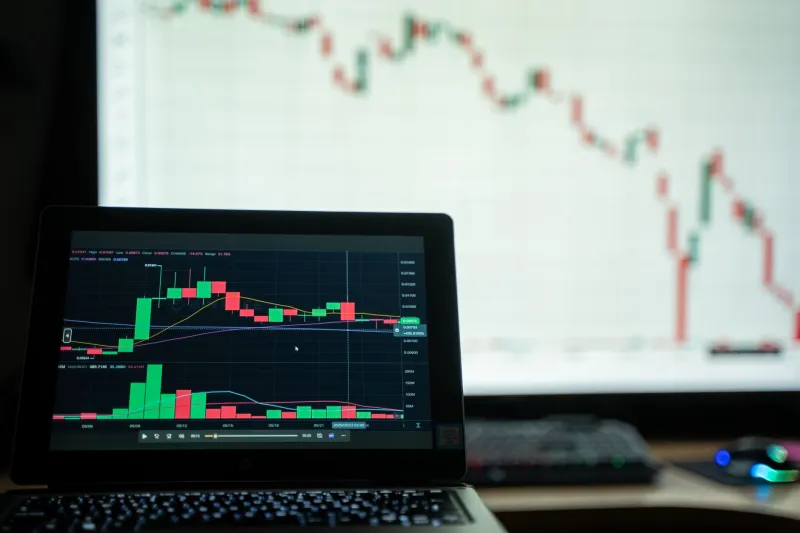
The Clock on the Wall Is Lying to You
Most US-based traders operate on a schedule shaped by convenience rather than market structure. Early morning sessions after the New York open feel active. Volume bars look tall. Spreads appear competitive. Everything seems to be working exactly as it should.
But appearances in forex and CFD markets are often engineered, not organic. What looks like a liquid market during certain trading windows may be nothing more than a broker-managed simulation of depth—one that collapses the moment you place a meaningful order or attempt to exit under pressure.
The result is a phenomenon that rarely shows up in a single trade but compounds relentlessly across a trading month: slippage that isn't dramatic enough to trigger a complaint but is consistent enough to systematically underperform your backtested expectations.
What Genuine Liquidity Actually Looks Like
Real liquidity in forex and CFD markets comes from institutional participants—banks, hedge funds, asset managers, and proprietary trading desks—who are actively quoting both sides of a market because they have genuine inventory needs. When these participants are present, your order interacts with a deep, competitive pool. Fill quality is high. The spread you see closely reflects the spread you receive. Slippage, when it occurs, is minimal and symmetrical.
The problem is that institutional participants operate on schedules tied to their own business cycles, not yours. The heaviest concentration of genuine institutional activity in forex occurs during the London session overlap with New York—roughly 8:00 AM to 12:00 PM Eastern Time. During this window, major currency pairs like EUR/USD and GBP/USD see the most competitive pricing and the most reliable fill quality.
Outside of that window, the picture changes significantly.
When Market Makers Step In—and What That Costs You
During off-peak hours, many brokers transition from acting as intermediaries in an interbank flow to functioning as market makers who internalize your orders. This is not inherently fraudulent—it is a standard and disclosed business practice. But it changes the economics of your trade in ways that are rarely explained clearly.
When a broker internalizes your order, they are effectively taking the other side of your position. They are quoting you a spread, and they are managing their own exposure to your trade rather than routing it to external liquidity. In this environment, the spread you see may widen imperceptibly. Your stop may trigger at a level that looks legitimate on a chart but reflects a momentary internal price rather than a true market print. Your limit order may fill at a slightly worse level than you anticipated.
None of these events are individually alarming. Collectively, they represent a significant drag.
The Sessions US Traders Most Often Misread
For traders based in the United States, two windows are particularly prone to liquidity misinterpretation.
The first is the pre-market session before the New York open—roughly 4:00 AM to 7:00 AM Eastern. Many US traders who follow economic calendars or international news are tempted to act on overnight developments during this period. Spreads often appear tight because broker platforms are designed to maintain competitive-looking quotes. But the institutional depth supporting those quotes is frequently thin, and larger orders will move the market against you more than they would during peak hours.
The second is the period following the New York close, from approximately 5:00 PM to 10:00 PM Eastern. This is the Sydney and early Tokyo session window. Retail traders who work traditional hours often find this the most accessible time to trade. It is also, for most major dollar pairs, one of the lowest-liquidity environments of the entire trading day. The combination of reduced institutional participation and heightened market-maker involvement creates conditions where your execution quality is measurably inferior—even if your charts show otherwise.
How to Identify Whether Your Broker Is Filling or Hedging
Distinguishing between genuine liquidity and market-maker simulation requires deliberate observation rather than assumption. Here are several practical approaches.
First, track your actual fill prices against the mid-price at the moment of order submission. Do this consistently over thirty to fifty trades. If you notice a pattern where fills during certain sessions are systematically worse than the quoted spread would suggest, you are likely experiencing internalization effects.
Second, pay attention to how spreads behave immediately after major data releases. A broker with strong institutional backing will see spreads widen briefly and then compress as real liquidity returns. A broker relying heavily on internal market-making will often hold wider spreads for longer because the institutional flow needed to tighten them is absent.
Third, examine your stop-loss execution records. Stops that trigger at prices fractionally beyond your set level are a normal feature of volatile markets. But if you notice stops triggering at levels that do not correspond to any visible price print on a reputable third-party data source, this warrants a closer look at your broker's execution model.
Adjusting Your Strategy Around Real Liquidity Windows
The most straightforward response to this reality is to concentrate your highest-conviction trades within the hours of genuine institutional participation. For US traders, this means prioritizing the New York-London overlap for major forex pairs and the first two hours after the New York equity open for index CFDs and commodity-linked instruments.
This does not mean abandoning off-hours trading entirely. Certain strategies—particularly range-bound or mean-reversion approaches—can function acceptably during lower-liquidity periods because they do not depend on precise execution at specific price levels. What changes is the risk profile of momentum-dependent or breakout strategies, which require real institutional order flow to sustain directional moves. Attempting breakout trades during the Asian session on a major dollar pair is one of the more reliable ways to generate false signals and poor fills simultaneously.
Position sizing also deserves reconsideration based on session. Many experienced traders quietly reduce their standard position size during low-liquidity windows, not because they expect the trade to fail, but because they understand that execution friction is higher and the cost of being wrong is compounded by inferior fills on exit.
The Deeper Lesson About Platform Transparency
The liquidity question ultimately points toward a broader principle: the platform you trade on is not a neutral conduit. It is a business with its own cost structure, liquidity relationships, and incentive architecture. Understanding how those factors interact with your trading schedule is not optional if you are serious about performance.
US traders in particular have access to a relatively sophisticated regulatory environment that requires brokers to disclose their execution models. Reading those disclosures—not just the marketing materials—gives you a clearer picture of when your broker is genuinely serving your order and when they are managing it.
The traders who consistently outperform over time are rarely those with the best entry signals. They are the ones who have learned to treat execution quality as a variable, not a constant—and who have structured their activity around the hours when that variable works in their favor rather than against them.