Acting Before the Alarm Sounds: How Zero-Hesitation Trading Puts You Ahead of Breakout Moves
Photo: Kukjanostenfx, CC0, via Wikimedia Commons
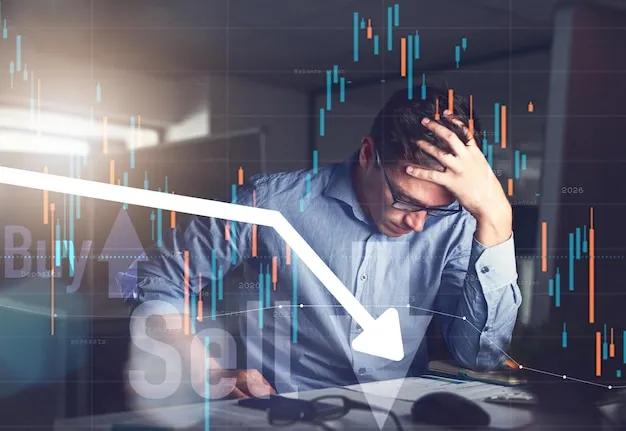
Every experienced trader has felt it—that frozen moment when a setup looks perfect, the conditions align, and yet the finger hovers over the execute button just a second too long. By the time the decision is made, the move has already happened. The position is entered late, the stop is too wide, and the risk-reward ratio that looked so compelling thirty seconds ago has collapsed.
This phenomenon is not a character flaw. It is a structural problem, and it has a structural solution. At IC Markets ZHV, we call this solution the Zero-Hesitation framework—a disciplined approach that combines psychological conditioning with precise technical criteria to ensure traders are positioned before the crowd, not chasing after them.
Why Analysis Paralysis Is Costing You Real Money
The US trading session is one of the most dynamic windows in global markets. Between the New York open at 8:00 AM EST and the overlap with London liquidity, price action can compress weeks of movement into a single hour. During these windows, hesitation is not neutral—it is actively costly.
Research in behavioral finance consistently shows that traders who deliberate excessively during live market conditions tend to make worse decisions than those who pre-define their criteria and execute systematically. The problem is not a lack of analysis. Often, it is too much analysis at the wrong moment. Traders re-examine charts they have already studied, seek confirmation from a third or fourth indicator, and ultimately act when the signal is already stale.
The Zero-Hesitation approach separates the analytical phase from the execution phase entirely.
The Two-Phase Framework: Preparation vs. Execution
The foundation of zero-hesitation trading rests on a clear division of labor within your trading routine.
Phase One: Pre-Market Analysis This is where all cognitive heavy lifting occurs—well before the opening bell. During this phase, traders identify key levels, define valid breakout criteria, and establish precise entry triggers. No decision is made in the heat of the moment; every contingency is mapped in advance.
For a EUR/USD breakout setup, for example, a trader might identify a consolidation range between 1.0820 and 1.0845 during the Asian session. They define their entry as a 15-minute candle close above 1.0845 with volume exceeding the 20-period average. Their stop is placed at 1.0828, and their first target is 1.0875—a clean 2.5:1 risk-reward ratio. This entire plan is written down before US markets open.
Phase Two: Mechanical Execution When the market opens and price begins to move, the trader's only job is to observe and execute the pre-defined plan. There is no re-analysis. There is no second-guessing. If the criteria are met, the trade is taken. If they are not, the trader waits. This mechanical discipline eliminates the emotional interference that degrades decision quality under pressure.
Reading Breakout Setups Before They Trigger
Zero-hesitation trading does not mean acting impulsively. It means acting precisely at the right moment because the groundwork has already been laid. Here are three technical setups that lend themselves particularly well to this approach.
1. The Compression Squeeze When Bollinger Bands narrow significantly—often visible on the 1-hour or 4-hour chart—the market is coiling energy ahead of a directional move. Pair this with a declining Average True Range (ATR) and you have a high-probability precursor to expansion. Traders using the ZHV approach identify these compressions during pre-market analysis and set conditional orders at the range boundaries, removing the need for real-time judgment.
2. The Volume-Confirmed Level Break Not all breakouts are created equal. A price break above resistance on thin volume is frequently a trap. A break accompanied by a surge in volume—particularly during the first 90 minutes of the New York session—carries substantially more conviction. Platforms like those available at IC Markets ZHV provide real-time volume overlays that make this distinction immediately visible.
3. The News Catalyst Alignment Macroeconomic events—Non-Farm Payrolls, Federal Reserve statements, CPI releases—create predictable volatility windows. Traders who integrate the economic calendar into their pre-market preparation can identify setups where technical breakout levels align with scheduled catalysts. When both factors converge, the probability of a sustained directional move increases materially.
Risk Management: The Other Half of Zero Hesitation
Executing quickly means nothing if position sizing and stop placement are not equally disciplined. The ZHV framework mandates that every trade entered includes three pre-defined parameters: entry price, stop-loss level, and at least one profit target.
A practical rule used by many US day traders within this framework is the 1% rule—no single trade risks more than 1% of total account equity. Combined with a minimum 2:1 risk-reward requirement, this structure means a trader can be wrong on more than half their trades and still generate net positive returns over time.
Trailing stops, particularly useful during trending breakouts in pairs like GBP/USD or USD/JPY, allow traders to lock in gains without manually monitoring every tick—another element that reduces the temptation to over-manage positions and introduce hesitation-driven errors.
Building the Habit: From Framework to Instinct
The ultimate goal of zero-hesitation trading is to internalize the framework so thoroughly that confident execution becomes second nature. This does not happen overnight. It is built through repetition on a demo account, through journaling every trade with honest post-analysis, and through gradually increasing position sizes only as the mechanical process becomes reliable.
US traders who commit to this discipline consistently report a shift in their relationship with the market. Instead of feeling reactive—always a step behind—they begin to feel prepared. The breakout that once triggered panic now triggers a calm, pre-planned response.
That shift, from reactive to prepared, is precisely what zero-hesitation trading is designed to produce. And in a market where speed and precision determine outcomes, that shift is worth more than any single indicator or signal.
Trade smarter. Analyze deeper. Win more—with IC Markets ZHV.