When the Plan Meets the Void: How Volume Collapse Destroys Even the Most Disciplined Trading Strategies
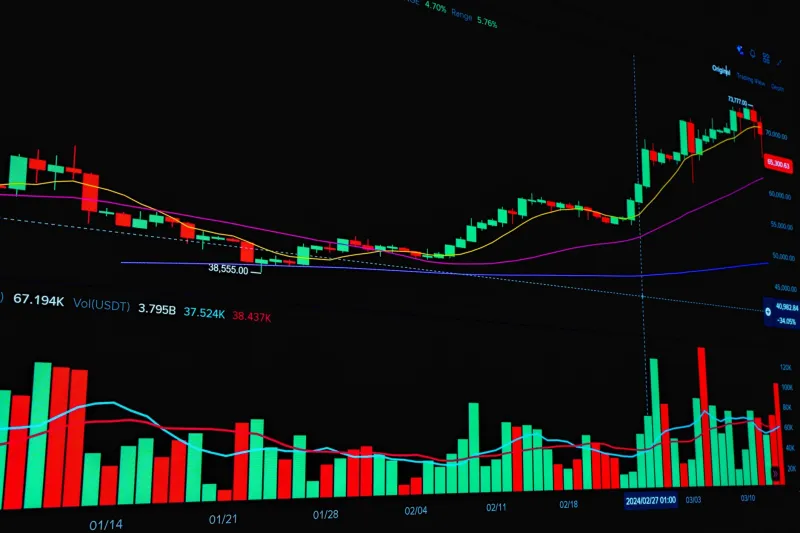
There is a particular kind of confidence that comes from having a fully developed trading plan. Entry criteria are defined. Risk parameters are set. Exit logic has been stress-tested against historical data. For many US-based forex and CFD traders, this level of preparation represents months of refinement. And yet, despite all of it, the plan fails—not because the analysis was wrong, but because the market stopped behaving like a market.
Volume collapse is one of the least-discussed risk factors in retail trading, precisely because it is invisible until the damage is already done. Spreads widen without warning. Fills arrive at prices that seem to belong to a different instrument. Stops trigger at levels that were, moments earlier, comfortably distant. The strategy did not fail. The conditions that made the strategy viable simply ceased to exist.
The False Confidence of a Detailed Plan
Most trading strategies are backtested and refined under what might be called "normal" market conditions—periods when liquidity is reasonably deep, bid-ask spreads are within expected ranges, and price discovery is functioning as intended. These are the conditions that dominate historical data, which means they are also the conditions that make backtested results look compelling.
The problem is that markets do not remain in "normal" mode indefinitely. Participation levels fluctuate throughout the trading day, across the trading week, and in response to external events ranging from Federal Reserve policy announcements to geopolitical developments. When participation thins out, the mechanics of price formation change in ways that most retail strategies are not equipped to handle.
A breakout system calibrated on high-volume sessions may generate entirely different outcomes when the same price level is breached during a low-participation window. The signal looks identical on the chart. The underlying conditions are not.
How Algorithmic Activity Masks the Problem
One of the more deceptive features of modern forex and CFD markets is that price movement can continue even when genuine human participation has retreated. Algorithmic systems—particularly high-frequency market makers—continue operating during low-volume periods, generating the appearance of normal market activity while the actual depth of the order book has thinned considerably.
For a trader monitoring price action, this creates a misleading picture. The chart is moving. Candles are forming. Volume indicators may even register activity. But the liquidity supporting those price levels is qualitatively different from what exists during peak participation hours. A position that would have been absorbed without incident during the New York open can move the market against itself during a quiet Friday afternoon or the hours preceding a major US economic release.
This is why raw price movement is an unreliable proxy for market health. Volume metrics, order book depth, and spread behavior collectively offer a more accurate picture—but only if traders know what they are looking for.
Early Signals of Volume Deterioration
Recognizing a declining participation environment before it affects your positions requires monitoring several concurrent indicators rather than relying on any single data point.
Spread expansion is frequently the first observable symptom. When market makers pull back their quotes or widen their bid-ask margins in response to uncertainty or reduced hedging capacity, the cost of execution rises before any directional move has occurred. Traders who track real-time spread data against their instrument's historical baseline will notice this shift earlier than those focused exclusively on price.
Tick frequency changes offer another early signal. In liquid markets, price updates arrive at a consistent cadence. When that cadence slows—or when price begins moving in larger, less frequent increments—it suggests that fewer participants are actively transacting. This is particularly relevant in forex pairs where continuous liquidity is typically assumed.
Divergence between correlated instruments can also indicate that something structural is shifting. If EUR/USD and GBP/USD begin moving in ways that diverge from their historical relationship, it may reflect that one or both markets are operating with reduced depth rather than genuine directional differentiation.
Practical Adjustments for Low-Participation Environments
Identifying volume deterioration is only useful if it informs a change in behavior. Continuing to execute a standard strategy in a thin market is not discipline—it is a failure to adapt to the environment the market is actually presenting.
Several execution adjustments are worth considering when participation is visibly declining:
Reduce position sizing proportionally. Thinner markets amplify the price impact of individual orders. A position that represents a routine size during peak hours may constitute a meaningful fraction of available liquidity during a low-volume window. Scaling down protects against both adverse fills and the risk of moving the market against your own entry.
Widen stop-loss placement relative to normal parameters. In low-liquidity environments, price can spike through technical levels with no sustained follow-through. Stops positioned at levels that would hold in normal conditions may be triggered by transient volatility rather than genuine directional movement. This does not mean abandoning risk management—it means recalibrating it for the actual volatility profile of the current session.
Favor limit orders over market orders. When spreads are elevated and depth is uncertain, market orders carry significantly higher execution risk. Limit orders allow traders to define the maximum acceptable price for entry and avoid being filled at the outer edge of a temporarily wide spread.
Reconsider whether the trade is worth taking at all. This is perhaps the most underutilized adjustment available to retail traders. Sitting out a low-participation period is a legitimate strategic choice. Protecting capital from a degraded execution environment is not passivity—it is a form of active risk management that many experienced traders treat as a core discipline.
Distinguishing a Lull from a Structural Withdrawal
Not every volume dip signals the same risk. Intraday lulls—particularly the mid-session quiet that often occurs in the hours between the London close and the New York afternoon—are generally temporary and predictable. Structural withdrawal is a different phenomenon entirely.
Structural withdrawal occurs when institutional market makers reduce their participation in response to sustained uncertainty, regulatory changes, or significant shifts in the risk environment. This type of withdrawal can persist for days or weeks and fundamentally alters the liquidity profile of affected instruments. During periods of acute financial stress—think the early days of major geopolitical events or sudden policy pivots from the Federal Reserve—structural withdrawal can occur with little warning and with consequences that outlast the immediate news cycle.
Traders who have built their strategies around assumptions of continuous institutional participation are particularly exposed to this risk. Monitoring for sustained changes in average spread levels, consistent reduction in tick frequency across multiple sessions, and unusual divergence in correlated pairs can help distinguish a routine lull from something more durable.
Execution Intelligence as a Competitive Edge
At IC Markets ZHV, the premise underlying every piece of analysis we publish is straightforward: smarter execution requires understanding the market infrastructure that surrounds your trade, not just the directional signal that prompted it. A perfect setup in a broken market is not an opportunity—it is a liability.
The traders who consistently extract value from their strategies are those who treat liquidity conditions as a variable to be monitored continuously, not a constant to be assumed. Volume deterioration will occur. The question is whether you recognize it before the market forces you to.
Adjusting for low-participation environments is not a concession to market conditions. It is the clearest expression of what disciplined, analytical trading actually looks like when it is practiced with genuine rigor.