Execution Gap: How to Anticipate Where Your Stop Loss Will Actually Trigger

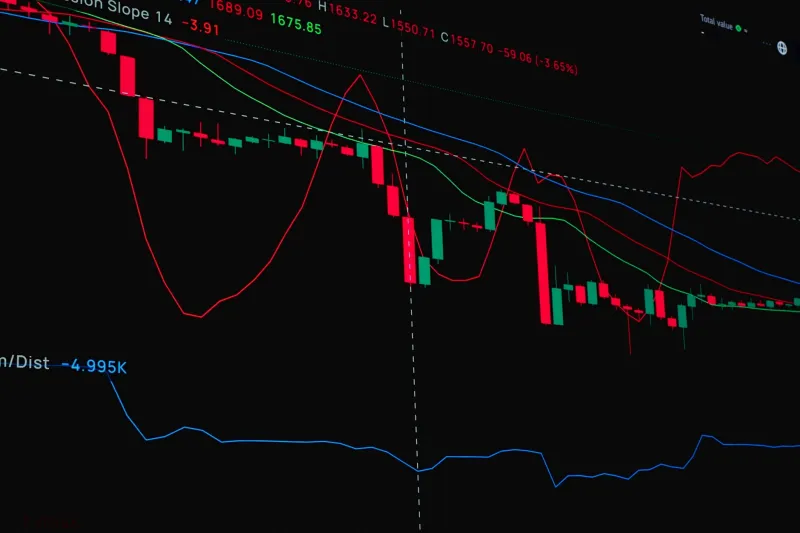
Photo by Photo by Nick Chong on Unsplash on Unsplash
The Protection That Doesn't Always Protect
Every trader who has placed a stop loss understands the basic promise: if price reaches your designated level, the position closes. What the textbooks rarely explain is that this promise comes with an asterisk. In fast-moving markets, your order does not simply execute at the number you typed—it executes at the price the market is willing to provide at that exact moment. For US forex and CFD traders operating across sessions that span Tokyo opens to New York closes, that distinction carries real financial weight.
Slippage—the difference between your intended exit price and your actual fill—is not a malfunction. It is a structural feature of how markets process orders under stress. Recognizing it as such is the first step toward managing it intelligently.
Why the Gap Exists in the First Place
At its core, slippage emerges from a mismatch between order supply and available liquidity. When price moves rapidly—during a Federal Reserve announcement, an unexpected Non-Farm Payrolls print, or a geopolitical headline—the bid-ask spread widens and market depth thins. Your stop loss converts to a market order the moment the trigger price is touched. That market order then fills against whatever liquidity exists at that instant.
If the nearest available sell-side liquidity sits five pips below your stop, you fill five pips below your stop. The platform executed correctly. The market simply moved faster than the order book could replenish.
Institutional order flow amplifies this dynamic considerably. Large participants—hedge funds, proprietary desks, and algorithmic systems—routinely cluster stop orders around technically significant levels: round numbers, prior session highs and lows, and moving average confluences. When price approaches these zones, institutional algorithms probe for that liquidity. As retail stops trigger in sequence, the resulting cascade of market orders consumes the order book rapidly, widening the gap between the trigger price and the final fill.
Mapping the Predictable Patterns
Slippage is not random. Experienced traders who study execution data over time identify consistent patterns that reveal when and where fills are most likely to deviate from intended levels.
High-impact news windows represent the most concentrated slippage risk. In the thirty seconds surrounding a scheduled economic release—FOMC decisions, CPI prints, GDP revisions—spreads on major forex pairs can expand by multiples of their normal range. Stops placed within reach of the anticipated move frequently fill well beyond the trigger. Widening your stop buffer ahead of known news events, or simply reducing position size, directly addresses this exposure.
Session transitions carry a less obvious but meaningful risk. The overlap between the London and New York sessions produces deep liquidity and tighter spreads, making it the most favorable window for stop placement. Conversely, the period immediately following the New York close and before the Tokyo open represents a liquidity valley. Thin participation means even modest price movements can produce disproportionate slippage. US traders who hold positions overnight into Asian hours should account for this reduced depth when sizing their risk.
Technical cluster zones deserve particular scrutiny. If your stop sits directly at a round number—say, 1.0900 on EUR/USD or 150.00 on USD/JPY—you share that level with thousands of other traders. Institutional players understand this. Stops at obvious technical levels are more likely to be targeted by short-term probes, creating the very momentum that triggers cascading fills and widened execution gaps.
Quantifying Your Expected Slippage
Rather than treating slippage as an unknowable variable, disciplined traders build it into their pre-trade calculations. A practical approach involves reviewing your own execution history across different market conditions and cataloging the average deviation between intended and actual fills. Most professional-grade platforms, including those available through IC Markets ZHV, provide detailed trade history exports that make this analysis straightforward.
For traders who lack sufficient personal data, monitoring bid-ask spread behavior around your target instruments during key sessions provides a useful proxy. If EUR/USD typically trades at a 0.5-pip spread during London hours but widens to 3–4 pips during low-liquidity windows, a stop placed two pips below a support level may realistically fill four to five pips lower under adverse conditions. That knowledge changes the math on your risk-reward calculation before you ever enter the trade.
Building a "slippage buffer" into your stop placement—positioning the order slightly further from your maximum acceptable loss to accommodate expected execution drift—is a straightforward adjustment that preserves the protective intent of the stop without surrendering unnecessary capital to preventable gaps.
Turning Liability Into Tactical Awareness
The traders who consistently manage slippage most effectively are not those who avoid it entirely—that is an unrealistic goal in active forex and CFD markets. They are the ones who treat execution gap as a quantifiable cost, the same way they treat spread or commission.
This reframing produces several practical advantages. First, it prevents the psychological disruption that comes from unexpected fills. When you have already accounted for a potential two-pip deviation in your planning, a two-pip slip generates no surprise and no reactive decision-making. Second, it encourages more precise position sizing. If your actual risk per trade is the distance to your stop plus expected slippage, your position size should reflect the full cost—not just the distance on the chart.
There is also an asymmetric opportunity embedded in this knowledge. During high-slippage environments, short-term momentum tends to overshoot, then revert. Traders who understand that institutional stop-hunting activity creates temporary price distortions can identify entry points on the reversal side of those moves—capitalizing on the same dynamic that penalizes unprepared traders.
The Discipline of Execution-Aware Trading
Market analysis and trade setup are the components most traders focus on. Execution quality receives far less attention, yet it compounds meaningfully over hundreds of trades. A trader who loses an average of two pips to slippage on every stop-out, across fifty losing trades per year, surrenders a hundred pips in execution costs alone—before accounting for spread or commissions.
At IC Markets ZHV, the emphasis on trading smarter extends beyond chart reading and macroeconomic analysis. It encompasses every variable between the decision and the fill. Slippage is one of the most consistent and underestimated of those variables. Approach it with the same rigor you apply to entry criteria, and it stops being a liability buried in your account statement—it becomes a factor you priced in before the trade opened.