Leverage Is Not Your Problem: What US CFD Traders Actually Get Wrong About Risk
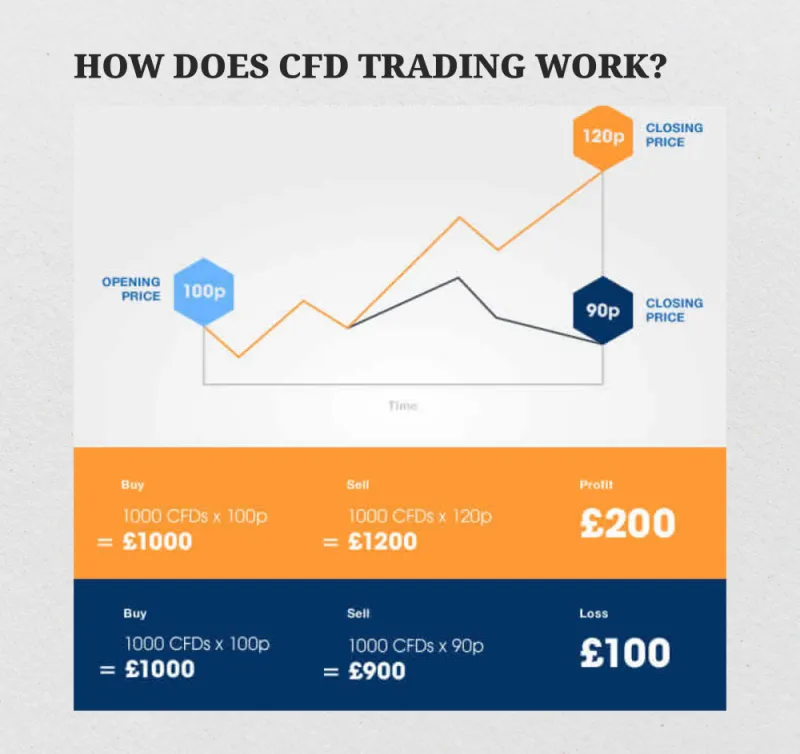
Photo: CFD trading leverage financial risk calculation charts professional trader, via liquidity-provider.com
When regulators and financial commentators discuss the dangers of CFD trading, leverage is almost always the first variable cited. The number itself—30:1, 20:1, 50:1—carries an implicit warning, a suggestion that the ratio alone is the source of danger. Retail traders internalize this framing and spend considerable mental energy focused on which leverage setting to select, as though the correct number will insulate them from loss.
It will not. And this misplaced focus is costing American traders real money.
The leverage ratio is not irrelevant. But it is, in the hierarchy of actual risk factors, closer to the bottom than the top. What sits above it—rarely discussed with equal emphasis—is the cluster of behavioral and structural variables that determine whether leverage functions as a precision instrument or a loaded weapon pointed at the trader's own account.
What Leverage Actually Does (and Doesn't Do)
Leverage in CFD trading allows a trader to control a larger notional position than their deposited capital would otherwise permit. At 30:1, a $1,000 margin deposit controls a $30,000 position. This is the definition that appears in every broker disclosure document, and it is accurate as far as it goes.
What the disclosure does not emphasize is that leverage itself is neutral. It amplifies outcomes in both directions with perfect symmetry. A 1% move in the underlying asset produces a 30% return on margin at 30:1—but it also produces a 30% loss. The ratio does not know which direction the market will move. It simply scales the consequence of being wrong.
This is precisely why focusing on the ratio in isolation misses the point. The question is not how much leverage you are using. The question is how much of your total account equity is at risk on any single position, and whether that exposure is consistent with a survivable drawdown sequence.
Position Sizing: The Variable Brokers Underemphasize
Consider two traders—call them Trader A and Trader B—both trading EUR/USD CFDs through the same platform, both operating at 20:1 leverage, both with $10,000 in their accounts.
Trader A enters a position equivalent to $100,000 notional exposure—their full leverage capacity. A 50-pip adverse move against them represents a $500 loss, or 5% of their account. A 200-pip move—entirely plausible during a volatile US session—represents a $2,000 loss, or 20% of their account. Three such losses in sequence would reduce their account to $4,800, a level from which recovery requires a 108% return just to break even.
Trader B, using the same 20:1 leverage available to them, enters a position sized to risk no more than 1% of their account per trade—$100. They achieve this by reducing their notional exposure and setting a defined stop-loss. Even if Trader B experiences ten consecutive losing trades—a statistically significant losing streak—their account stands at $9,044. They remain operational. They can continue trading.
The leverage ratio is identical. The outcomes are structurally incomparable. The difference is entirely attributable to position sizing discipline.
Margin Call Cascades: The Mechanism Most Traders Don't Model
A margin call is not simply an inconvenience. In volatile market conditions, it is a forced liquidation event that often occurs at the worst possible moment—when prices have moved sharply against the trader's position and the market is at its most illiquid.
The cascade dynamic works as follows. A trader holding multiple open positions sees one position move against them significantly. Their available margin decreases. If it falls below the broker's maintenance margin threshold, the broker begins closing positions—typically starting with the largest or most liquid. This forced closure locks in losses that might otherwise have been temporary. The account equity drops further. Additional positions may be closed. The trader, who entered the session with a diversified set of positions, exits with a single outcome: a substantially reduced account.
What makes this dynamic particularly dangerous is that it can be triggered not by poor analysis, but by a single unexpected event. A Federal Reserve statement delivered outside of scheduled meeting times. A geopolitical development breaking overnight. A flash crash in a correlated asset class. The trader's analysis may have been correct on every position. The timing, however, was not survivable given their margin structure.
Professional traders model their margin requirements not based on current market conditions, but based on stress scenarios. They ask: if volatility doubles from here, does my margin structure hold? If every position moves against me simultaneously by two standard deviations, am I still solvent? Retail traders rarely perform this analysis. They should.
Overnight Gap Risk: The Exposure That Doesn't Sleep
CFD positions held overnight carry a category of risk that is distinct from intraday price movement: gap risk. When markets close—or, in the case of forex, thin dramatically during the Asian session—prices can move substantially before the next liquid trading period begins. A stop-loss order that would have protected a trader during active hours may be executed far below its specified level when the market reopens, a phenomenon known as slippage.
For US traders holding positions through the weekend, this risk is compounded. Geopolitical events, economic data releases from international markets, and central bank communications can all occur during the 48-hour window when US markets are closed. The position that appeared well-managed on Friday afternoon may open Monday morning to a gap that exceeds the trader's entire intended risk allocation for the week.
This is not a theoretical concern. It is a recurring feature of CFD trading that experienced practitioners account for explicitly—either by reducing position sizes before weekend exposure, closing positions entirely, or using options-based hedges where available.
How Professional Traders Actually Use Leverage
The framing of leverage as a profit multiplier is a retail construct. Institutional and professional traders view leverage primarily as a capital efficiency tool—a way to deploy available capital across multiple positions without tying up the full notional value of each trade in margin.
The distinction matters because it changes the decision framework entirely. A trader using leverage as a profit multiplier is asking: how large a position can I take? A trader using leverage as a capital efficiency tool is asking: what is the minimum position size required to achieve my target risk-adjusted return, and how do I preserve the remainder of my capital for other opportunities?
The second question produces structurally different behavior. It produces smaller individual positions, more rigorous stop-loss placement, and a portfolio-level view of risk rather than a trade-by-trade view. It produces accounts that survive.
Building Structure Before Building Positions
The actionable takeaway for US CFD traders is not to reduce leverage. It is to build a risk structure that makes leverage irrelevant as a primary concern. That structure includes a fixed percentage risk rule per trade, a pre-defined maximum daily loss threshold, a margin stress test applied before each session, and a clear policy on overnight and weekend exposure.
When those structural elements are in place, the leverage ratio becomes what it was always meant to be: a technical parameter, not a risk management strategy.
At IC Markets ZHV, the analytical tools and market data we provide are built to support exactly this kind of structural approach—because in CFD trading, the traders who analyze deeper are the ones who ultimately win more.