When Fast Becomes Fatal: The Hidden Cost of Impulsive Execution in Forex Trading

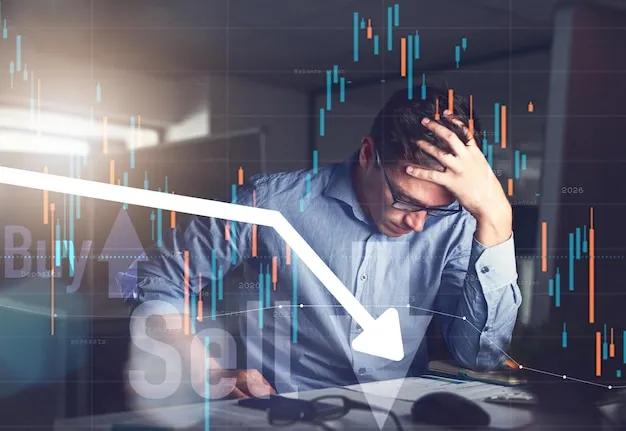
Photo: forex trader stressed at computer screens making fast decision, via img.freepik.com
There is a persistent myth circulating in retail trading communities: that hesitation is the enemy of profit. Social media feeds are saturated with highlight reels of traders who caught a breakout in seconds, closed a position at the exact peak, and doubled their account in a single session. What those feeds omit—conveniently—are the dozens of trades that preceded each win, the revenge entries made in frustration, and the margin calls triggered by decisions made in the span of a heartbeat.
At IC Markets ZHV, we believe that trading smarter is not synonymous with trading faster. In fact, for a significant segment of active retail traders in the United States, the pressure to execute without pause is one of the most destructive forces operating on their accounts today.
The Psychology of the Snap Judgment
Human beings are not wired for financial risk. Our brains are conditioned to respond to perceived threats and opportunities with immediacy—a survival mechanism that served our ancestors well but operates as a liability in a live trading environment. When a trader watches a currency pair surge against an open position, the amygdala fires before the prefrontal cortex has had a chance to evaluate the situation rationally.
This is not a character flaw. It is biology. But understanding it is the first step toward neutralizing its effect on your trading account.
Consider a scenario familiar to many US-based forex traders. It is 9:45 a.m. Eastern Time, thirty minutes into the New York session overlap with London. EUR/USD has broken a key resistance level, and a trader—having spent the previous evening marking up charts—recognizes the setup. Rather than waiting for confirmation, they enter immediately, convinced that any delay will cost them the move. The position initially moves in their favor by twelve pips, then reverses sharply on a data revision. The trader, now underwater, holds the position hoping for recovery. It does not recover. They exit at a forty-pip loss.
Was this a failure of analysis? No. The original read on the market was sound. It was a failure of execution discipline—specifically, the absence of a confirmation criterion before entry.
Impulsive Entries Versus Calculated Quick Decisions
There is an important distinction that experienced traders understand intuitively but rarely articulate: not all fast decisions are impulsive, and not all deliberate decisions are wise.
A calculated quick decision occurs when a trader has pre-defined entry conditions, the market meets those conditions, and the trader acts without delay. The speed here is a product of preparation. The trigger was set in advance; the trader is simply pulling it.
An impulsive entry, by contrast, occurs when a trader reacts to price movement without reference to a pre-established plan. The movement itself becomes the rationale. This is the psychological trap that destroys more retail accounts than any market condition or broker spread.
The difference between these two modes of execution is not visible in the trade ticket. Both might involve entering a position within seconds of a price move. The distinction lives entirely in the trader's internal process—and that process is either structured or reactive.
Revenge Trading: Speed's Most Dangerous Companion
If impulsive entries are the first stage of account deterioration, revenge trading is the accelerant. After a loss—particularly one that felt avoidable—the emotional drive to immediately recoup capital is overwhelming for many traders. The mind reframes the next trade not as an independent opportunity to be evaluated on its own merits, but as a mechanism for correcting an injustice.
This framing is catastrophic. A trader in revenge mode is not analyzing the market. They are negotiating with it. They are demanding that it return what it took. The market, indifferent to such demands, does not comply.
A common pattern observed among retail traders in volatile sessions—particularly around Federal Reserve announcements or non-farm payroll releases—involves a sequence of losses compounding within a single trading session. Each loss is followed by a larger position intended to recover the deficit faster. Each subsequent loss is therefore larger in dollar terms. The account does not bleed; it hemorrhages.
A Framework for Knowing When to Pause
Developing the discipline to pause is not about becoming a passive or slow trader. It is about building a personal decision protocol that separates market conditions from emotional states. The following framework, applicable to forex and CFD traders at any experience level, provides a practical starting point.
The Pre-Entry Checklist: Before placing any trade, require yourself to answer three questions in sequence. First, does this setup match a defined pattern in my trading plan? Second, have I identified both my entry trigger and my invalidation level? Third, am I entering because the market is telling me something, or because I feel compelled to act?
If the answer to the third question carries any emotional charge—urgency, frustration, excitement—treat that as a yellow flag. It does not necessarily mean the trade is wrong. It means the decision requires an additional five seconds of review.
The Post-Loss Cooling Period: Establish a mandatory pause after any loss that exceeds a defined threshold—say, one percent of account equity. This pause does not need to be lengthy. Ten to fifteen minutes is often sufficient. The purpose is to allow the prefrontal cortex to re-engage before the next decision is made.
Session-Level Position Limits: Define in advance the maximum number of trades and maximum total exposure you will carry during any single session. Once those limits are reached, the session is over. This rule eliminates the structural conditions under which revenge trading occurs.
The Competitive Advantage of Calculated Patience
In a market environment where algorithmic systems execute in microseconds and institutional desks have access to order flow data that retail traders never see, the idea that a retail trader can win through speed alone is not just misguided—it is dangerous. The genuine edge available to disciplined retail traders is not execution velocity. It is decision quality.
A trader who enters five carefully selected positions per week, each backed by a defined plan and managed with structural discipline, will consistently outperform a trader who takes twenty positions driven by impulse and urgency. This is not a philosophical claim. It is a mathematical one, rooted in the compounding effect of reduced drawdowns and the preservation of capital during losing streaks.
Speed, when it is the product of preparation, is a tool. Speed, when it is the product of anxiety, is a liability. The traders who build sustainable performance over time are those who have learned to tell the difference—and who have built systems that make the distinction automatic rather than effortful.
At IC Markets ZHV, our tools are designed to support that kind of structured, analytical approach to trading. Because winning more, over the long run, is rarely about moving first. It is about moving right.