One Risk, Many Labels: The Hidden Single-Bet Problem Inside Diversified Trading Portfolios
Photo: Pfelton, Public domain, via Wikimedia Commons
Let us be direct about something the conventional diversification narrative consistently glosses over: in a genuine market stress event, most "diversified" trading portfolios are not diversified at all. They are a single leveraged directional bet, distributed across multiple instruments with different tickers and different asset class labels.
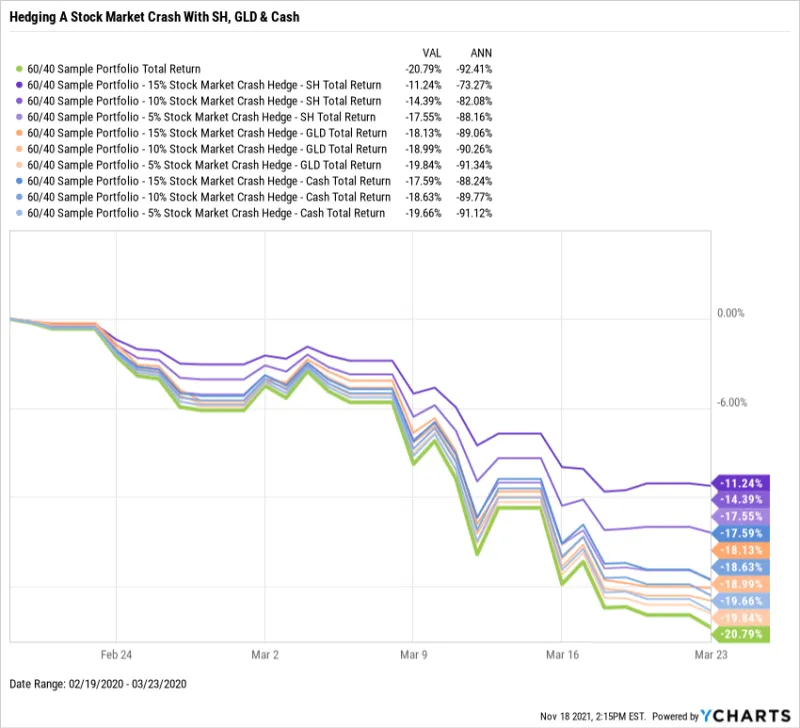
This is not a fringe observation. It is a structural feature of modern financial markets — one that has been demonstrated repeatedly during every significant dislocation of the past two decades, from the 2008 financial crisis to the COVID-19 shock of March 2020 to the synchronized selloff triggered by the Fed's hawkish pivot in 2022. The mechanism is always the same. Assets that appeared uncorrelated during calm conditions begin moving in lockstep the moment liquidity drains from the system.
For active traders managing positions across forex pairs, commodity CFDs, and equity indices, understanding this phenomenon is not academic. It is the difference between a portfolio that survives a stress event and one that does not.
The Illusion of Spread
Consider a portfolio that holds a long position in EUR/USD, a long position in gold, and a long position in a basket of US technology stocks via CFDs. On the surface, this looks like textbook diversification: a currency pair, a commodity, and an equity sector. Different asset classes, different drivers, different fundamental stories.
In normal market conditions, the correlations between these three positions are genuinely modest. Gold may move on inflation expectations. EUR/USD responds to ECB-Fed policy divergence. Tech stocks react to earnings, interest rate sensitivity, and growth narratives. The daily price movements do not track each other closely. The portfolio appears balanced.
Now introduce a genuine risk-off shock — a sudden geopolitical escalation, an unexpected credit event, or a Federal Reserve statement that fundamentally reprices the rate outlook. What happens?
EUR/USD sells off as capital flows into the US dollar, the default haven currency. Gold initially sells off too, as leveraged positions across all asset classes are liquidated to meet margin calls — a counterintuitive but well-documented pattern. Tech stocks decline sharply as risk appetite collapses and growth valuations are repriced lower. All three positions move against the trader simultaneously.
The portfolio was not diversified. It was long risk. The different labels were irrelevant.
Why Correlations Are Unstable by Design
The mathematical foundation of traditional diversification theory — originating with Harry Markowitz's Modern Portfolio Theory in the 1950s — assumes that asset correlations are relatively stable over time. This assumption is empirically false, and it is most false precisely when diversification is needed most.
Correlations between assets are not fixed properties. They are dynamic measures that reflect the current behavior of market participants. During low-volatility, high-liquidity environments, investors and traders pursue differentiated strategies across asset classes, and correlations remain subdued. During high-volatility, low-liquidity environments, the dominant behavior shifts to risk reduction — and risk reduction looks the same regardless of what you are selling. Everything goes up for sale simultaneously.
The result is a correlation spike. Assets that registered a 0.2 correlation under normal conditions may register a 0.85 correlation during a stress event. The diversification benefit evaporates at exactly the moment it was supposed to provide protection.
For US traders operating with leverage through CFD instruments, this dynamic is particularly acute. Leverage amplifies the velocity of losses during correlated drawdowns, and margin requirements can force position liquidations at the worst possible moments — locking in losses that a less leveraged portfolio might have been able to absorb.
Stress-Testing Your Correlation Assumptions
The practical response to this problem begins with stress-testing — specifically, examining how your current portfolio positions have historically correlated during defined stress periods rather than across all market conditions.
The distinction matters enormously. A rolling 252-day correlation calculation between EUR/USD and gold will produce a number that reflects mostly normal market behavior, because normal market behavior represents the majority of trading days. What you actually need to know is how those instruments correlated during the last five significant risk-off events.
This is not difficult to calculate. Pull the daily returns for each position you are holding across the March 2020 COVID shock, the Q4 2018 equity selloff, and the H1 2022 rate-driven decline. Calculate the pairwise correlations for those specific windows. You will almost certainly find that the stress-period correlations are substantially higher than the rolling-average figures you may have been using to assess portfolio balance.
Once you have those stress-period correlations in hand, you can construct a more honest picture of your actual risk exposure. If three of your four positions have a stress-period correlation above 0.7, you do not have four positions. You have one position, expressed four times.
The Counterintuitive Path to Genuine Diversification
Here is the part that challenges conventional thinking: genuine diversification in a trading portfolio often requires accepting higher concentration in fewer, truly uncorrelated positions — rather than spreading capital thinly across many positions that will behave identically under pressure.
Two positions that have a stress-period correlation of 0.1 or below provide more genuine risk reduction than ten positions with an average stress-period correlation of 0.7. The mathematics are unambiguous. The challenge is that genuinely uncorrelated positions are harder to find and require more deliberate construction.
In practical terms, this might mean pairing a directional forex position with a volatility-based instrument that benefits from uncertainty, rather than adding another directional position in a different asset class. It might mean allocating a portion of the portfolio to instruments that are structurally short duration during a rate-rising environment, while maintaining long positions in assets that benefit from the same environment.
The key criterion is not asset class diversity. It is behavioral diversity under stress — and that requires explicit testing rather than assumption.
Accepting Concentration as a Feature, Not a Failure
There is a cultural resistance among retail traders to the idea of concentrated portfolios. Concentration feels reckless. Diversification feels prudent. But this framing conflates the number of positions with the actual distribution of risk — a confusion that consistently costs traders money during market dislocations.
A trader holding two genuinely uncorrelated positions, sized appropriately, is carrying less real risk than a trader holding eight positions that will all decline together when conditions deteriorate. The appearance of diversification is not the substance of it.
At IC Markets ZHV, the analytical tools available to active traders are designed to support exactly this kind of rigorous portfolio construction — moving beyond surface-level asset allocation toward a genuine understanding of how positions interact under the full range of market conditions, including the ones that matter most.
The question worth asking about your current portfolio is not how many different instruments you are holding. It is whether, in the next significant market dislocation, those instruments will behave differently from one another. If the honest answer is no, you are not diversified. You are concentrated — just without the clarity that comes from acknowledging it.